


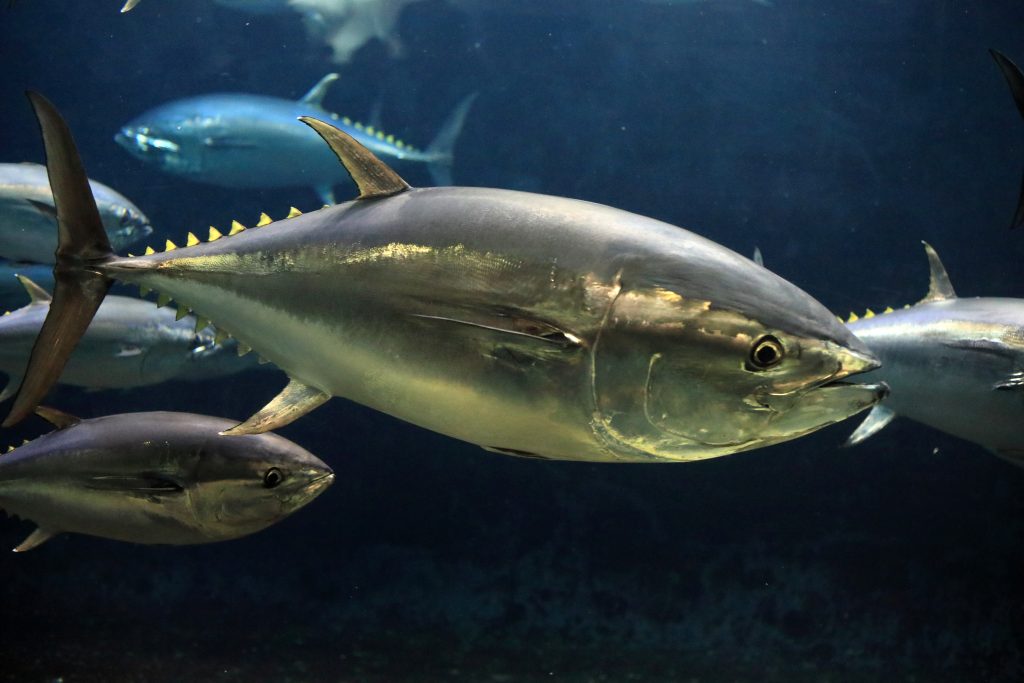
There are perhaps six weeks in the year when this coast is at its most extraordinary, and most visitors miss them entirely.
From late April to mid-June, Atlantic bluefin tuna pass through the Strait of Gibraltar on their way to spawn in the Mediterranean. They have made this journey for as long as there have been tuna. And for three thousand years, the people of this coast have been waiting for them with the same method — a maze of nets called the almadraba, introduced by the Phoenicians and barely altered since.
It is one of the last genuinely ancient things still happening in Europe, and it happens a few kilometres from our villas.
What the almadraba actually is
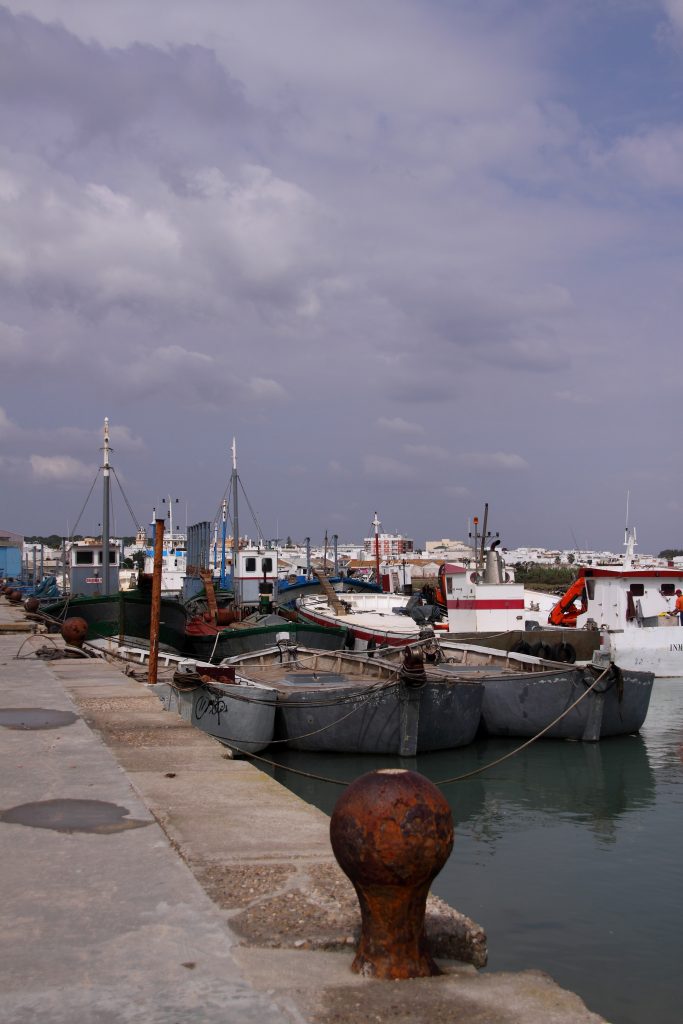
Not a fishing fleet. Not a chase. The almadraba is a system of vertical nets anchored to the seabed directly across the migration route, forming corridors that guide the tuna into a final chamber.
Three things distinguish it:
It is fixed. The nets go in each spring and come out after the season. Nothing is dragged across the seabed.
It is passive. The tuna come to the nets of their own accord. Nothing pursues them.
It is selective. Undersized fish and other species are released. Only mature tuna are taken.
Four towns on this coast still run almadrabas — Tarifa, Zahara de los Atunes, Barbate and Conil. It is the oldest continuously practised fishing method in the Western world.
The ronqueo
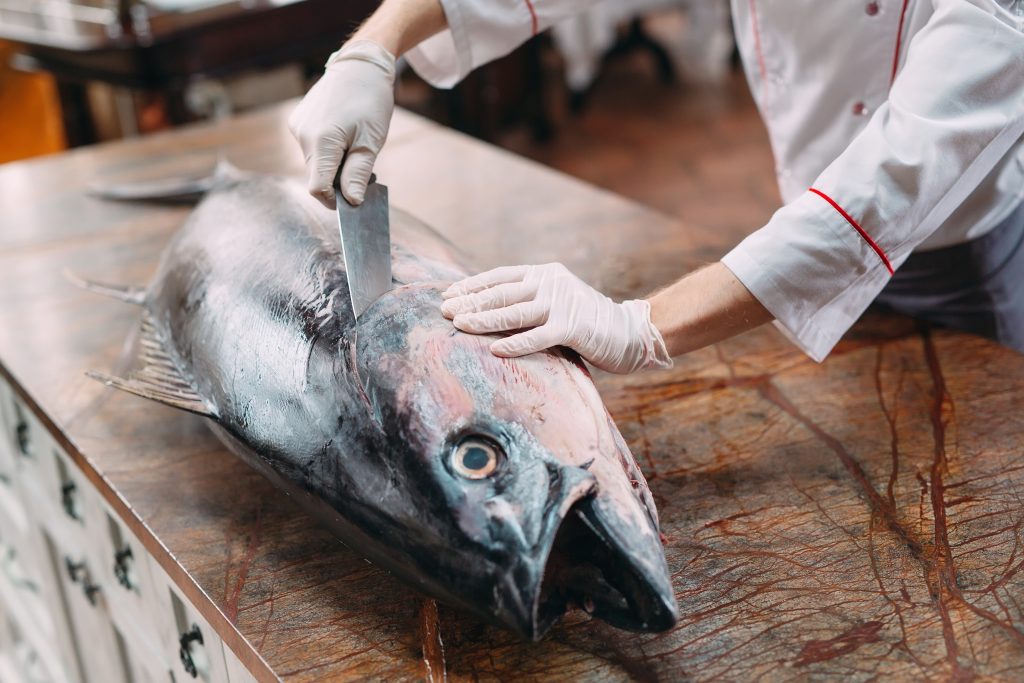
What follows the catch is, if anything, more remarkable than the catch itself.
The ronqueo is the ritual butchering of the tuna, performed by a ronqueador who separates a single fish into more than twenty-four distinct cuts using long knives and, in the best hands, taking almost nothing to waste.
The name comes from the sound: roncar, to snore — the rasp of the blade running along the backbone.
The cuts worth knowing before you sit down:
Watching a ronqueo performed properly is not a demonstration staged for visitors. It is how the fish is processed, and in season it happens daily. We can arrange for guests to see one.
Standing in the Roman vats at Bolonia
Twenty kilometres up the coast from Tarifa, at Bolonia, the Romans built Baelo Claudia — a town whose entire economy rested on this same fish.
They salted tuna here and produced garum, a fermented sauce that was among the most valuable commodities in the empire. The stone salting vats are still there, cut into the ground metres from the sand, beneath one of Europe’s great shifting dunes.
Stand in one of those vats in May and the nets are in the water a few kilometres away, catching the same fish on the same migration. There are very few places left in Europe where two thousand years of continuity is that physically obvious — and almost nowhere you can do it with the site to yourself, which in the early evening you generally can.
Several of our villas are within walking distance.
On sustainability
Guests ask, and they are right to.
Atlantic bluefin was severely overfished in the late twentieth century. The almadraba is widely regarded as among the least damaging ways to take it — selective, passive, and capped under international quota — and stocks have recovered substantially since the strict quota regime came in.
The operators on this coast are traceable, and we will tell you exactly where a fish came from if you want to know. We would rather have that conversation than avoid it.
How we arrange the season for our guests
This is where local knowledge stops being a marketing phrase and starts being useful.
The tables that matter book out. The restaurants running full ronqueo tasting menus in Zahara and Tarifa are booked weeks ahead in May by people who live here. Our concierge team books them year after year, which is a different thing from calling on the day.
A private chef, and a whole fish. For guests who would rather not move, we arrange a chef who buys that morning and cooks several cuts of a single tuna in your villa — ventresca, tarantelo and descargamento in one sitting, on your own terrace. In season this is the single best meal we can put together on this coast.
Seeing the ronqueo. Access varies by operator and by day, and it depends on the catch. We arrange it when it can be arranged, and we tell you plainly when it cannot.
Baelo Claudia, properly. A private guided visit with an archaeologist, timed for late afternoon when the coaches have gone.
Where to stay for the season
Zahara de los Atunes and Atlanterra — closest to the tuna kitchens, and the town most identified with the fish.
Bolonia — minutes from the Roman salting vats, on one of the quietest beaches in Andalucía.
El Cuartón and Betis — high above the Strait itself, looking across the water the tuna are moving through, with Africa on the horizon.
Late April to mid-June is, by some margin, the finest time to be here. The tuna is at its peak, the weather is mild, the wind is workable, and the summer has not yet arrived.
If you would like us to build a stay around it, tell us what you are after. We live here, and we will be honest about what is worth your time.