


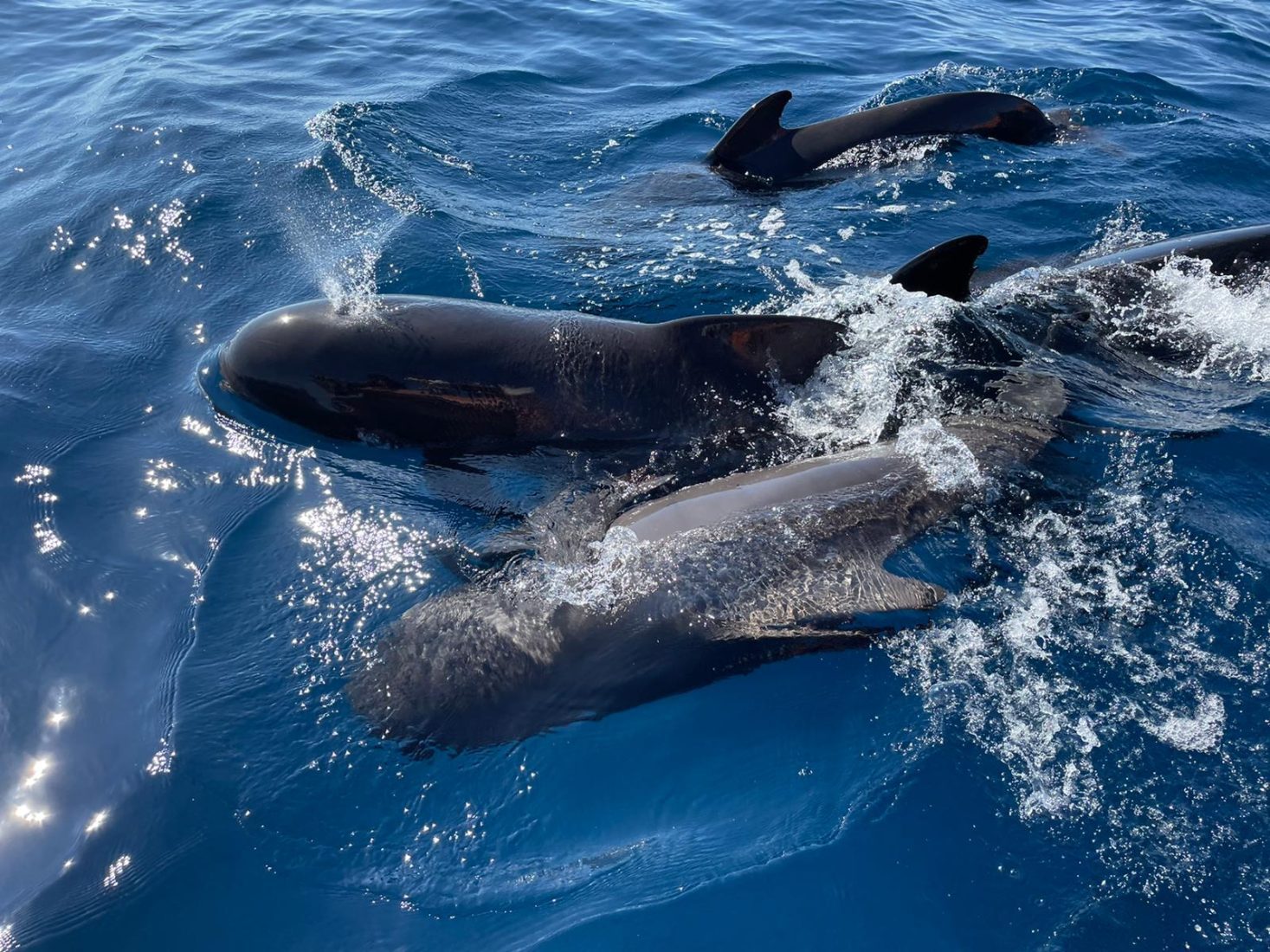
Fourteen kilometres of water separate Europe from Africa here, and every whale and dolphin moving between the Atlantic and the Mediterranean passes through it.
That is why Tarifa is one of the finest places in Europe to see cetaceans — not because of a single spectacular species, but because the geography concentrates an entire migration into a channel you can see across.
What is actually out there
Present year-round:
- Bottlenose dolphin — the most frequently seen, often riding the bow
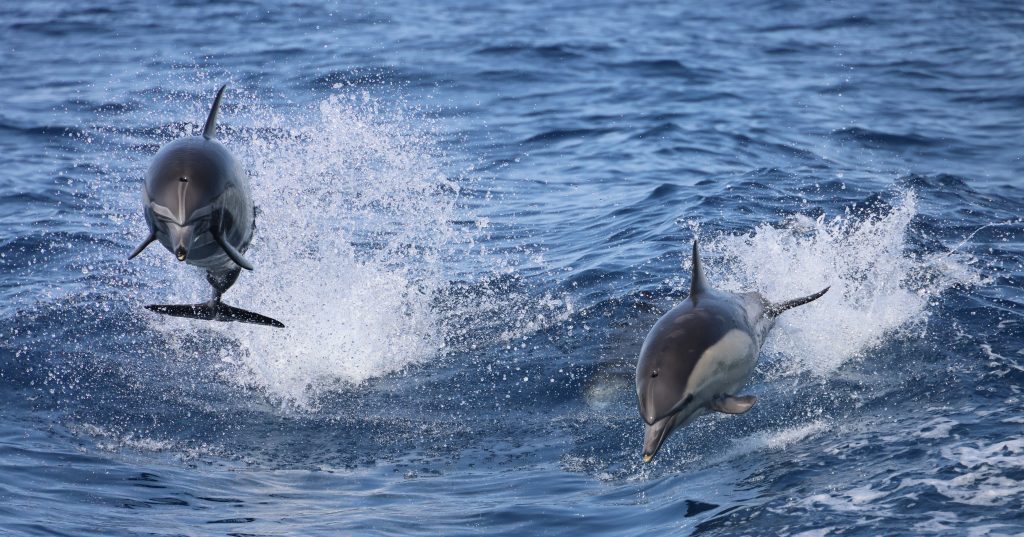
- Striped dolphin — fast and acrobatic, in large pods
- Long-finned pilot whale — large, sociable, resident in the Strait
- Sperm whale — the giant here, usually alone or in small groups
Seasonal:
- Orca — May to September. The Strait orcas are a distinct group that follow the bluefin tuna migration. June and July are the best months, and seeing them is genuinely memorable.
- Fin whale — November to March. The second-largest animal on earth, wintering here.
- Common dolphin — year-round, with enormous pods in spring.
- Risso’s dolphin — less frequent, but regular.
When to come for it
| Season | What you are most likely to see |
|---|---|
| Spring (Mar–May) | Huge dolphin pods; fin whales departing |
| Summer (Jun–Aug) | Orcas, following the tuna; all dolphin species; sperm whales |
| Autumn (Sep–Oct) | Orcas continuing; warm sea; pilot and sperm whales |
| Winter (Nov–Feb) | Fin whales, pilot whales, sperm whales — and almost nobody else on the boat |
If orcas are the reason you are coming: June or July, and build in more than one attempt. Wildlife does not perform to schedule, and anyone who promises otherwise is selling you something.
How the trips work
Standard trips from Tarifa port run two to two and a half hours, departing several times daily. Morning slots generally have calmer water.
Some vessels in the Strait are research-based — organisations such as FIRMM run trips with biologists aboard collecting data. These are meaningfully more interesting than a commercial sightseeing run, and they are the ones we book for guests who genuinely care about the wildlife.
Practical, from experience
- Book ahead in July and August. The good boats fill.
- Bring a layer. It is windy on the water even when it is hot on land.
- The Strait can be choppy. If you are prone to seasickness, take something beforehand rather than regretting it an hour out.
- Morning is usually better. Calmer sea, better light.
What we arrange
The right boat, not the nearest one. There is a real difference between operators here, in both the quality of the guiding and the way the animals are approached. We use the ones we would put our own families on.
Private charters. For guests who would rather not share a deck — or who want a biologist to themselves, and the flexibility to stay out when something is happening.
Honest timing. If you are here in a week when conditions are poor or the orcas have not been showing, we will say so and suggest another day. We would rather you saw something than filled a slot.
Where to stay for it
Boats leave from Tarifa port, so anywhere in the town or Los Lances puts you minutes from the departure.
Our villas in El Cuartón and Betis sit high above the Strait itself. Guests there have watched pilot whales from the terrace with binoculars — no substitute for going out, but a fair consolation on a day when the sea is up.
Tell us what you are hoping to see and when you can travel, and we will tell you honestly what the odds are.