


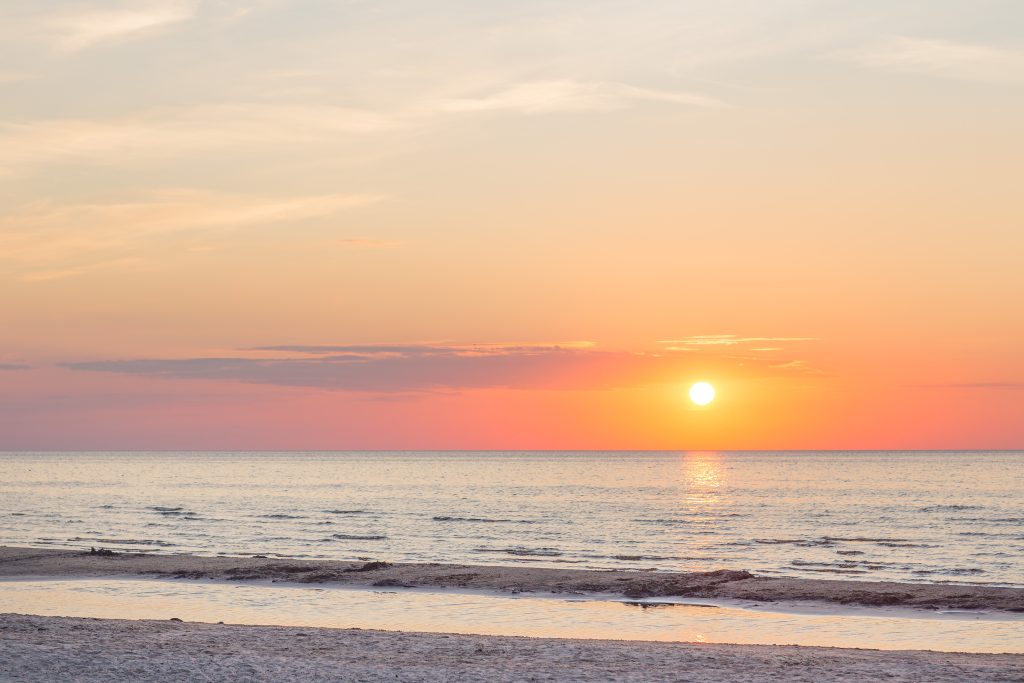
We are asked this more than any other question, and the honest answer is that there is no bad month here — but there is a right one for what you actually want to do.
Tarifa sits at the southern tip of continental Europe, where the Atlantic meets the Mediterranean and Africa is fourteen kilometres away. Its climate is governed by two winds: the Levante from the east and the Poniente off the Atlantic. Understand those and you understand the year.
The year at a glance
| Month | Weather | Wind | Crowds | Comes into its own for |
|---|---|---|---|---|
| Jan–Feb | 14–17°C | Variable | Very low | Walking, birdwatching, complete quiet |
| Mar–Apr | 18–22°C | Moderate | Low | Whale watching, riding, wildflowers |
| May–Jun | 22–27°C | Building | Medium | Almadraba tuna, orcas, the best balance |
| Jul–Aug | 27–33°C | Strong Levante | High | Kitesurfing at full strength |
| Sep–Oct | 22–27°C | Consistent | Medium | Warm sea, reliable wind, space |
| Nov–Dec | 15–19°C | Variable | Low | Fin whales, walking, the real town |
Spring: March to May
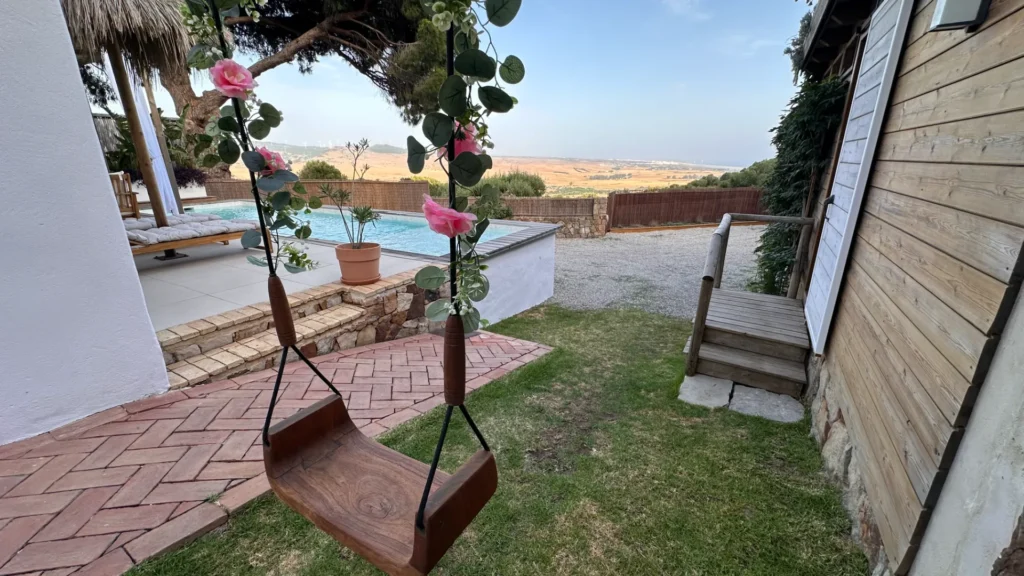
Arguably the finest season here, and the one most visitors miss.
The countryside is green and covered in wildflowers, temperatures climb from 18°C to 25°C, and the beaches are effectively yours. Whale and dolphin watching peaks. The Strait becomes one of Europe’s great bird migration corridors. Riding through the Alcornocales is at its best.
And from late April, the almadraba nets go in and the bluefin arrive — six weeks that are, for us, the highlight of the year.
Worth knowing: March and April can bring rain, and evenings need a layer.
Summer: June to August
Tarifa at its most famous, and its most crowded.
The Levante can blow for days, occasionally at 80 km/h, which is exactly what draws kitesurfers from across the world. Long evenings — sunset after 21:30 in July. Sea at 22–24°C. The town at full volume.
We will be straight with you: on a heavy Levante day the wind is relentless, including on the beach, and it is not everyone’s idea of a holiday. Families with small children are usually happier in June or September. Villas with sheltered terraces matter more in August than in any other month, and we will steer you towards them.
July and August require booking well ahead — for the villa, and for anything you want to do.
Autumn: September to October
If you asked us to pick one month, it would be September.
The crowds thin, temperatures hold at 24–27°C, the sea is at its warmest of the year, and the Poniente delivers reliable conditions across every water sport. Orca sightings continue. Everything is still open, and none of it is full.
October is quieter still, and often just as good.
Winter: November to February
Mild — 15–19°C — and this is when you see the town as it actually is.
Fin whales winter in the Strait. Walking in the Alcornocales is at its best. Restaurants are full of people who live here. On a clear winter afternoon with the Levante down, the light over the Strait is the finest of the year.
Not a beach holiday. For some guests, considerably better than one.
What we would actually tell you
For the food: May, for the almadraba.
For the balance: September.
For serious wind: July and August, with a sheltered villa.
For quiet and long walks: November through February.
For wildlife: June and July for orcas, spring and autumn for the bird migration.
Booking around it
The properties worth having in July and August go early — often the previous autumn. The best of them are not on the platforms.
Tell us when you can travel and what matters to you, and we will tell you honestly whether that month suits it, or whether shifting by three weeks would give you a considerably better holiday. We have talked guests out of August more than once.